

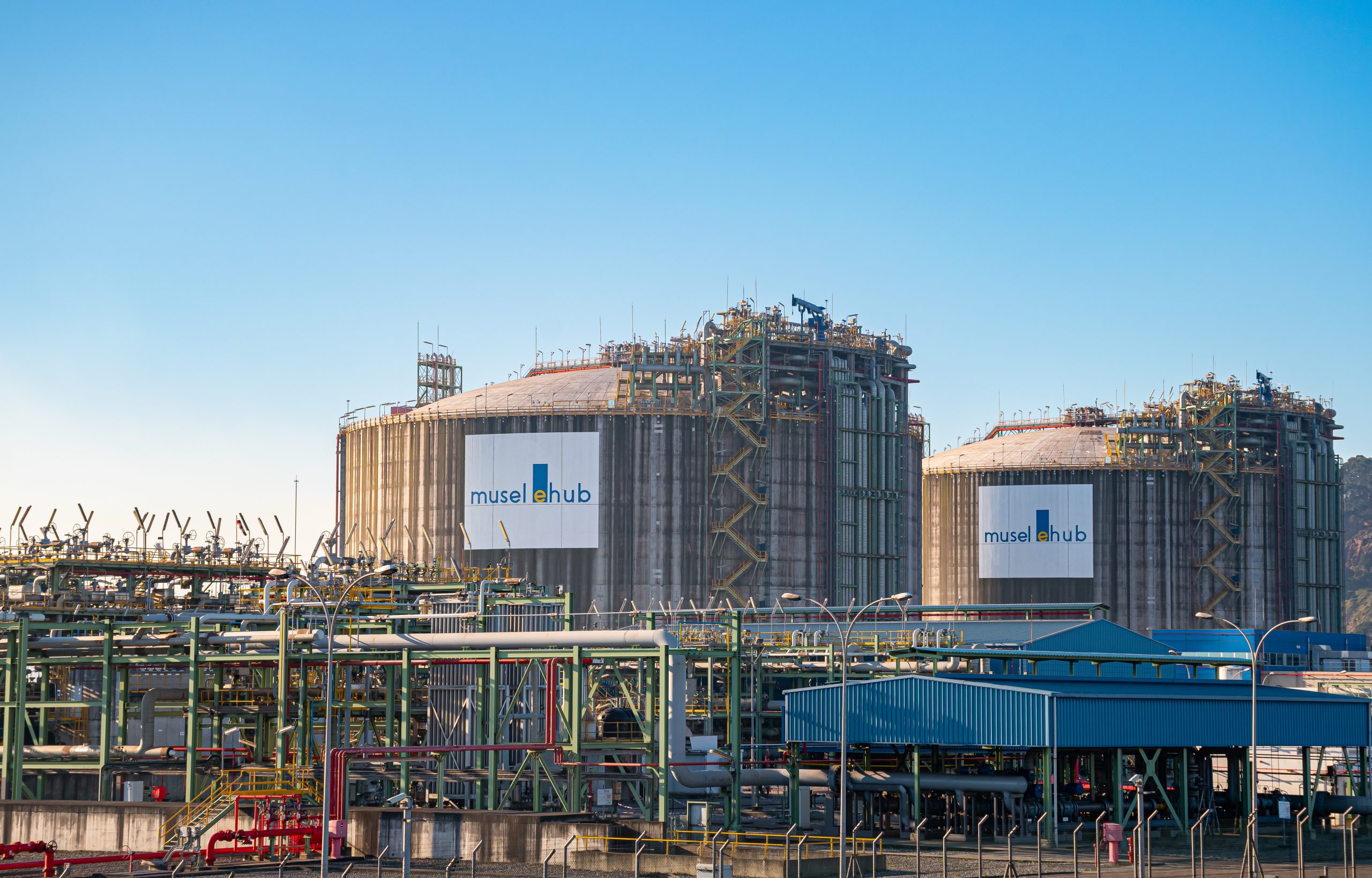
The Musel E-Hub terminal recently took a decisive step forward in its contribution to the decarbonisation of the energy sector: it is now fully equipped to supply bioLNG, a decarbonised fuel obtained from the processing of domestic and industrial organic waste. This service became available on 5 November, opening up a new avenue for progress towards European emission reduction targets.
Thanks to the interconnected infrastructure of the gas system, the service allows biomethane injected into the network to be recognised as bioLNG and supplied directly from the terminal. This advance represents a significant innovation for maritime and road transport, two key sectors in the transition to low-emission fuels.
As highlighted by the managing director of Musel Energy Hub, Antonio Manzano Sevilla, ‘we have reached a new milestone in the development of the Gijón terminal as a multi-molecule plant and reinforced the competitiveness of this key infrastructure for energy supply security in Spain and Europe’.
For Enagás and Reganosa, the companies that own the terminal, this achievement is the culmination of more than ten years of joint work in promoting initiatives aimed at decarbonising maritime transport, as well as developing specific procedures and regulations for ship refuelling operations and other innovative projects.
With this advance, Musel E-Hub continues to consolidate its position as a strategic infrastructure on the road to a more sustainable, flexible energy system that is prepared for the challenges of the future.